
Episode 64: Setting Expectations with Your Teens with Lisa Reichelt
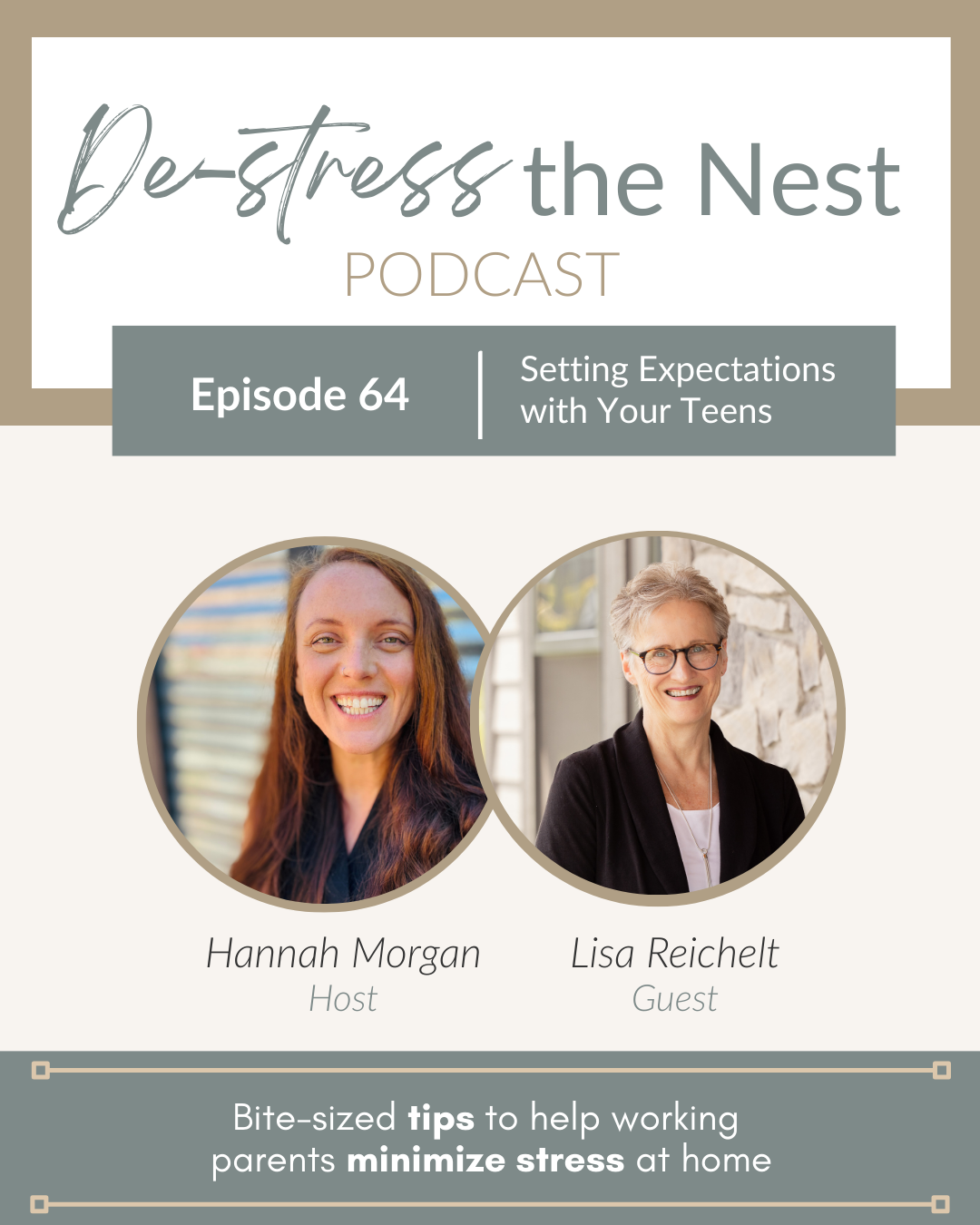
In this episode, Hannah Morgan sits down with Lisa Reichelt, a certified parenting coach who helps families develop healthier communication and stronger relationships through every stage of parenting.
Lisa explains how to set rules, expectations, and consequences that actually work — especially with teens — by involving them in the process and focusing on respect, reasoning, and relationship. Whether it’s curfews, chores, or honesty, Lisa’s approach empowers parents to move away from power struggles and toward collaboration, empathy, and long-term connection.
Key Takeaways
Explain the “why”: Teens are curious and want to understand the purpose behind rules.
Collaborate on expectations: Involve kids in setting realistic goals that align with family values.
Use the 3 R’s for consequences: They should be respectful, reasonable, and related to the behavior.
Parent for the long game: The relationship you build now shapes your bond for life.
Stay age-appropriate: Involve kids in discussions about responsibility when they’re ready for it.
Quotes
“Teens are thinking humans — they want to know the why behind the rules.”
“Consequences should be respectful, reasonable, and related.”
“Parenting is a relationship, not a power struggle.”
“When kids help shape the rules, they’re more likely to follow them.”
“The connection you build today is the foundation for your relationship tomorrow.”
Resources Mentioned
Champion Your Parenting — Coaching, tools, and support to help parents reduce conflict and build strong, lasting relationships with their kids.
Heron House Management — Virtual house management for busy families: we handle your to-dos so you can focus on what matters most.
Subscribe & Leave a Review:
If you enjoyed this episode, please subscribe and leave a review on Spotify, iHeartRadio, Apple Podcasts or your favorite podcast platform. Your feedback helps us reach more listeners and continue to bring you valuable content!
Episodes Released Weekly on Tuesdays
This episode of De-Stress the Nest is sponsored by Heron House Management.
About Heron House Management:
Heron House Management is a virtual house management service that takes the stress out of your busy life by taking on your mental load and managing your To Do list. We provide fractional virtual house management for busy families at 10, 15 and 20+ hours/month.
Meal planning, signing up for kids activities, scheduling doctor's appointments, finding a house cleaner, planning your kid's birthday party, getting quotes for that home renovation project, or scheduling a monthly date night with your significant other and so much more. We do it all!
-
[00:02] Hannah Morgan:
Welcome to De-Stress the Nest, a podcast for busy parents where experts share bite-sized tips on how to create systems that minimize stress at home. I'm your host, Hannah Morgan.[00:12] Hannah Morgan:
Today’s episode is sponsored by Heron House Management — the first-ever virtual house management service that lightens your mental load by handling your to-do list with monthly subscriptions of 10, 15, and 20+ hours per month. From meal planning and doctor’s appointments to birthday parties and home projects, Heron House Management helps busy families reclaim their time and live their best lives. Learn more at heronhousemanagement.com.[00:28] Hannah Morgan:
Lisa, I'm thrilled to have you on the show today. You’re a parenting coach — tell us a bit more about who you are and what you do.[00:36] Lisa Reichelt:
Thank you so much, Hannah. It’s awesome to be here! I love that I get the chance to share about what I do, because parent coaching is still relatively unknown. Parents turn to experts for everything else — plumbing, taxes, home repairs — but for some reason we think we should just know how to parent.Parent coaching offers guidance, structure, and perspective from someone who’s been there. I work with parents one-on-one to help them adjust their parenting approach so they can build stronger, lasting relationships with their kids at any age. It’s such rewarding work.
[01:15] Hannah Morgan:
I love that. Parenting really is the only job where you’re expected to be perfect without any training or handbook. So I can appreciate that you’re providing that kind of support.[01:25] Hannah Morgan:
Okay Lisa, today we’re going to dig deep into rules, expectations, and consequences — especially with teens, but really applicable at all ages.[01:34] Lisa Reichelt:
Absolutely! It’s interesting how much of what works for teens also works for younger kids. The difference is that as they get older, we sometimes forget the skills that used to work — like empathy, collaboration, and communication.When it comes to rules, many parents struggle with how to enforce them. We set curfews, chores, and expectations for living together, but we often forget to talk about why those rules exist. Teens are thinking humans — they want to understand the purpose.
For example, instead of just saying, “Clean your room,” we can sit down and talk about why it matters. Maybe it’s about respect for shared space or having a calm environment. Invite them to define what a “clean room” looks like. It’s not about control; it’s about shared understanding.
[02:28] Lisa Reichelt:
The same goes for curfews. Rather than dictating a time, ask: “What’s your expectation for when you’ll be home, and why?” When they’re part of the conversation, they take ownership of the agreement.I learned this lesson the hard way. When my daughter’s room was always messy, I threatened to take the door off her hinges. So we did — and she thought it was hilarious! It backfired completely. I realized we hadn’t discussed the “why” behind that rule — and I ended up with no door to close on the mess.
[03:02] Hannah Morgan:
That’s such a good example — we’ve all had those moments where our “solution” creates another problem.[03:07] Lisa Reichelt:
Exactly! It’s all about collaboration and communication.Now, moving on to expectations — these should also be created with your kids, not just for them. If you expect family dinners or weekly movie nights, talk about why those things matter. Tie them back to your family’s values — honesty, kindness, togetherness.
In our family, honesty was huge. When my daughter struggled with lying, I reminded her: this isn’t just about disappointment; it’s about our family value of honesty. Connecting expectations to values gives them meaning.
[03:52] Lisa Reichelt:
Finally, let’s talk about consequences — a big trigger for parents. I use what I call the 3 R’s: consequences should be Respectful, Reasonable, and Related to the behavior.When kids are involved in setting consequences, it becomes a learning opportunity. I used to ask students as a principal, “What do you think your consequence should be?” and then guide them through it. Parents can do the same at home.
For instance, if your teen lies, ask what they think is fair. Then help them connect it — “How is this consequence related to what happened?” That builds reflection and accountability.
[04:40] Hannah Morgan:
I love that — and I learned the hard way that this only works when it’s age-appropriate. I once asked my four-year-old what his consequence should be, and he said, “Watch TV.”[04:48] Lisa Reichelt:
(Laughs) Yes! That’s a positive consequence! But you’re right — as kids grow, they can handle more responsibility and reflection.The goal is always to nurture communication, because parenting is fundamentally a relationship. Every relationship has rules, expectations, and consequences — even friendships.
If you don’t maintain those things at home, it becomes much harder to sustain that connection once your kids are grown.
[05:28] Hannah Morgan:
I think about that all the time — everything I do now is building the foundation for my future relationship with my kids.[05:35] Lisa Reichelt:
Exactly. Parenting is long-term. You’re investing in the relationship you want later.[09:45] Hannah Morgan:
That’s such a great reminder, Lisa. Thank you for sharing such thoughtful, practical insights.[09:51] Lisa Reichelt:
Thank you for having me![09:56] Hannah Morgan:
Thanks for listening to De-Stress the Nest — the podcast where experts share bite-sized tips on how to simplify your life. Don’t forget to subscribe and tune in every Tuesday for more ways to make home feel easier.