Episode 98 - What Parents Need to Know About Raising Kids in the AI Era with Sarah Dooley
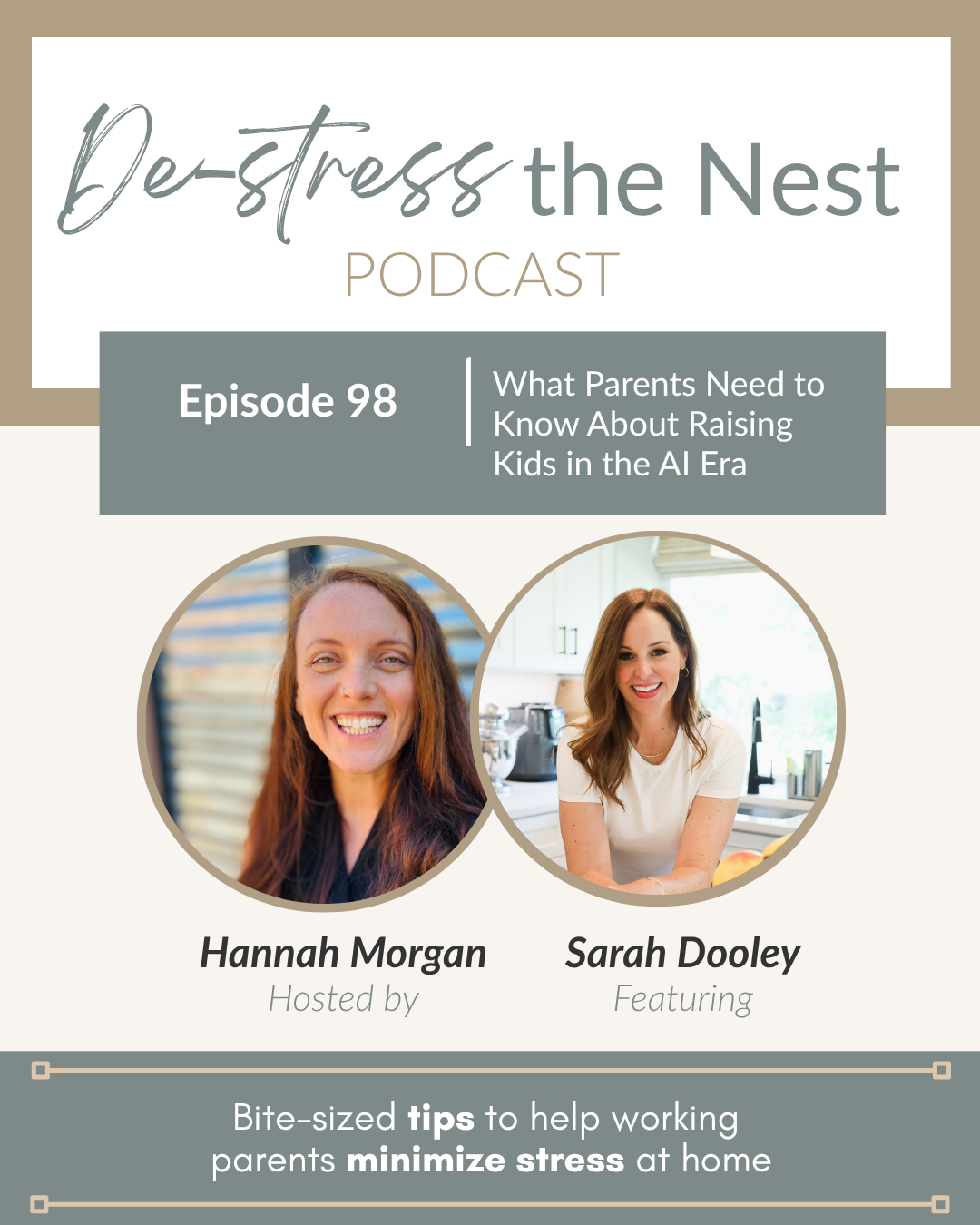
What Parents Need to Know About Raising Kids in the AI Era
AI is already woven into everyday family life, from streaming platforms and video games to school devices and social media. So how can parents help their children navigate it safely?
In this episode, Hannah talks with Sarah Dooley, founder of AI Empowered Mom, about the do’s and don’ts of AI with children. Sarah shares why parents shouldn't wait to start talking about AI, how to explain that AI isn't a person or a friend, why AI literacy starts with parents themselves, and which emerging AI tools she considers off-limits for her own family.
They also discuss AI companions and toys, privacy concerns, the importance of maintaining healthy "friction" in childhood, and why conversations about AI safety need to evolve alongside the technology.
Key Takeaways
Don't wait to talk to your kids about AI. AI is already embedded in many of the technologies families use every day.
Teach children that AI isn't human. It may communicate like a person, but it's a machine—not a friend or family member.
AI conversations should be ongoing. Technology and its risks are changing too quickly for a one-time conversation about safety.
Parents need AI literacy, too. Before teaching children about AI, parents should understand what these tools can and can't do.
Don't blindly trust AI-generated information. Generative AI can be excellent at creating content, but factual information needs to be checked by a human.
Be cautious about AI companions and toys. Sarah recommends maintaining a boundary between children and AI companionship until stronger safety assurances exist.
Childhood needs some friction. Struggling with problems and navigating difficult situations are important parts of development, and AI can sometimes remove too much of that friction.
Every family needs its own technology boundaries. Parents should consider their values and decide what types of AI use are appropriate for their family.
Privacy matters. Sarah specifically raises concerns about AI-enabled glasses and other technologies that can potentially capture or expose information about people.
Stay informed. Because the AI landscape changes rapidly, parents need to continually reassess the tools their children encounter.
Quotes From the Episode
“Don't assume that this is going to go away or that it won't impact your family.”
“This isn't a member of our family. This isn't our friend. This is a thinking machine that helps our family.”
“When it comes to facts, you have to check them. You have to have a human in the loop.”
“We try and keep a little bit of friction in our kids' lives and make parents' lives a little bit easier.”
Resources Mentioned
AI Empowered Mom— Sarah Dooley's work helping parents and caregivers use AI safely and responsibly to lighten the mental load.
Common Sense Media — A resource Sarah recommends for researching technology, AI tools, and family technology decisions.
Digital Mom — Another resource Sarah mentions using when evaluating technology for her family.
If you enjoyed this episode, please subscribe and leave a review on Spotify, iHeartRadio, Apple Podcasts or your favorite podcast platform. Your feedback helps us reach more listeners and continue to bring you valuable content!
Episodes Released Weekly on Tuesdays
This episode of De-Stress the Nest is sponsored by Hawkeye Focus Coaching. Learn more at www.hawkeyefocuscoaching.com.
About Heron House Management:
Heron House Management is a virtual house management service that takes the stress out of your busy life by taking on your mental load and managing your To Do list. We provide fractional virtual house management for busy families at 10, 15 and 20+ hours/month.
Meal planning, signing up for kids activities, scheduling doctor's appointments, finding a house cleaner, planning your kid's birthday party, getting quotes for that home renovation project, or scheduling a monthly date night with your significant other and so much more. We do it all! Learn more at www.heronhousemanagement.com.
About Hawkeye Focus Coaching:
Hawkeye Focus Coaching helps ADHD executives, entrepreneurs, and busy professionals turn ideas into action. Through personalized, hands-on coaching, deep work sessions, accountability, and practical systems, we help clients overcome overwhelm, stay focused on what matters most, and make consistent progress toward their goals.
Whether you're launching a business, leading a team, managing a major project, or trying to get out of constant firefighting mode, Hawkeye Focus Coaching helps you work with greater clarity, confidence, and momentum. Learn more at www.hawkeyefocuscoaching.com.
-
Hannah (Host): Sarah, I'm so excited to welcome you to the show today. Let's start by hearing a little bit about who you are and what you do.
Sarah: Thank you so much for having me, Hannah. I am the founder of AI Empowered Mom, where I help parents and caregivers lighten the mental load of modern life with safe, responsible AI assistance for families. I spent 20 years working in technology and consulting, and I took all that I learned from digital transformation and AI work there and helped bring it to families.
I have a book coming out next year, a podcast, and a weekly newsletter, all in the name of AI for Families.
Hannah: Amazing. We love it. Thank you so much for sharing today. We're so looking forward to this conversation.
Sarah: Oh, me too. I'm thrilled.
Hannah: Sarah, I'm really excited to have you on to talk about the do's and don'ts of AI with children and family life, especially when it comes to safety. There's a lot of chatter out there about AI tools, but we also need to be mindful of privacy, especially when our children are interacting with them. So let's talk a little bit about what recommendations you make for families to protect themselves, their data, and their children.
Sarah: I guess my first "don't" would be: don't wait. Don't assume that this is going to go away or that it won't impact your family. If your family uses streaming platforms, plays video games, uses social media, or even gets water out of the tap, AI has touched all of those things. The clothes that we wear—AI will use it to deliver those to us.
If your children go to school where devices are used, AI is embedded in those devices. So don't assume that you can avoid this, or that we can put our heads in the sand and wait for this one to pass, because AI is here to stay, whether we like it or not.
And I think the first "do" is to open the conversation with your kids as early as they're starting to recognize you talking to your device or using a voice assistant in your home. That's a great opportunity to start having a conversation about this.
"This isn't a member of our family. This isn't our friend. This is a thinking machine that helps our family. It can be an assistant. Think about it as a computer that's inside here, but it's not a person."
I started having those conversations with my three daughters as soon as they were aware of how we use a voice assistant in our home. And you can ask them today, "Is this our friend? Is it human? Can we talk to them about privacy?" And they will be able to tell you no, because we've started those conversations.
And I guess my third note here is: don't assume that one-and-done is good enough. Things are changing so rapidly with the technology as it enters our homes, enters our schools, and as our kids and their friends are impacted by it.
This is a conversation that has to be ongoing, which is why I am so passionate about using AI to help parents make their lives a little bit easier.
My vision and my hope for the future is that parents could use AI to make their lives a little lighter—whether it's meal planning, homework help, or outsourcing their reminders. And in doing so, they learn what AI is good at and where its weaknesses are. Then they can have informed conversations with their family about AI literacy.
Because you and I both know kids can smell a fraud from a mile away. If you start trying to have a conversation about AI but you don't know the basics, they'll never listen to you.
Hannah: Oh, that's great insight. So you really need to know what you're doing before you start looping your kids in. I love that.
Sarah: Well, at least you need to have dipped your toe into the water and know what things work and what things don't with AI.
For example, you need to know if it's good at knowing the facts or if it's good at generating content. Generative AI tools like ChatGPT, Claude, or Gemini are wonderful at generating new things. But when it comes to facts, you have to check them. You have to have a human in the loop.
Hannah: There's been a lot of news stories over the years of people falling in love with their chatbots and having deep conversations, even using them for therapy. I've also seen tools out there for children. I heard about this stuffy that has an AI chat tool within it.
Let's talk about how you want to make sure your children are aware of the "it's not a human" piece that you mentioned before. Let's double-click on that.
Sarah: Common Sense Media is a resource that I really respect and use heavily for my family and the community that I manage as an AI-empowered mom.
Common Sense Media has deemed no companion safe for kids under the age of 18 and no AI toys that use generative AI safe for kids under the age of 18.
We're still in the early days. In some ways, it feels like AI has been here forever, and in other ways it's like, "Weren't we just living without all of this?" But it is too early, and the safeguards and guardrails are not in place. Plus, we don't know the long-term implications of kids relying on these things.
In our family, we're a Furby family. We have some toys that talk to kids, but I really try and keep my kids with a guardrail that stays between them and companionship or friendship when it comes to AI. I hope other families will do the same until we have assurances of safety and know that it is safe for children—and even teens—to form relationships with AI.
The biggest issue, beyond just safety and AI being unpredictable in its nature right now, is that during childhood and teenage development years, learning how to manage problems and handle life's friction is such a big part of growing up.
AI makes things so easy and removes so much friction. So we try and keep a little bit of friction in our kids' lives and make parents' lives a little bit easier over at AI Empowered Mom.
Maybe someday in the future it'll be safe for kids to interact with AI, but we're not there yet.
Hannah: So you talk about toys that are chat toys as a no-go. What other tools do you generally like to discourage, or do you have on a no-fly list for parents?
Sarah: Sure. Things are changing all the time, so every parent has to think about their own values, think about what their technology boundaries are for their family, and then decide what's right for them.
Some families say no AI altogether, which is hard to live your life that way—completely off the grid. Some say no generative AI.
For me, I use resources like Common Sense Media and Digital Mom and have done some research on what works for my family.
We are a no-glasses, no-AI-glasses family because of how those tools can be used to violate people's privacy.
We're also a no-Grok family. Common Sense Media has a petition for families to sign, urging Grok, which is the AI model from xAI, to put more safeguards in place to keep families safe.
Nobody wants to talk about nudifying technology and think about that when it comes to their kids and teens, but right now we're seeing that Grok is just one step away from using AI for purposes that relate to child sexual abuse material. I think there is an urgent need for more safety and guardrails around those tools.
So those are two that are no-fly for my family.
Hannah: I love that you are so aware of the landscape. It's changing all the time, but knowing what landmines to avoid and being able to recommend that to other parents is so important. And then also moving that into action to make sustainable change going forward.
Thank you so much, Sarah, for bringing this to our community. I think it's so important that we stay informed and don't just blindly trust what is coming to us. Luckily, we have you as our voice of reason to connect us with those resources and provide your insights.
Hannah: Thank you.
Sarah: Thanks to you, Hannah. Thank you so much for the opportunity to have this conversation.
Hannah: Thanks, Sarah.